Recrystallised Silicon Carbide Ceramics Powering Extreme Applications aluminum nitride substrate
In the ruthless landscapes of modern sector– where temperature levels rise like a rocket’s plume, stress squash like the deep sea, and chemicals rust with unrelenting pressure– products need to be more than sturdy. They require to grow. Go Into Recrystallised Silicon Carbide Ceramics, a wonder of engineering that transforms severe conditions into possibilities. Unlike regular ceramics, this material is born from a distinct procedure that crafts it into a latticework of near-perfect crystals, granting it with strength that rivals steels and resilience that outlasts them. From the fiery heart of spacecraft to the sterile cleanrooms of chip factories, Recrystallised Silicon Carbide Ceramics is the unrecognized hero enabling modern technologies that press the borders of what’s feasible. This article dives into its atomic tricks, the art of its creation, and the strong frontiers it’s conquering today.
The Atomic Blueprint of Recrystallised Silicon Carbide Ceramics
(Recrystallised Silicon Carbide Ceramics)
To understand why Recrystallised Silicon Carbide Ceramics stands apart, visualize developing a wall not with bricks, yet with microscopic crystals that lock with each other like challenge pieces. At its core, this material is made of silicon and carbon atoms prepared in a duplicating tetrahedral pattern– each silicon atom bonded snugly to four carbon atoms, and the other way around. This structure, similar to ruby’s yet with rotating elements, creates bonds so solid they resist recovering cost under immense anxiety. What makes Recrystallised Silicon Carbide Ceramics special is exactly how these atoms are organized: during manufacturing, small silicon carbide bits are heated up to extreme temperature levels, creating them to liquify somewhat and recrystallize into bigger, interlocked grains. This “recrystallization” procedure eliminates powerlessness, leaving a material with an uniform, defect-free microstructure that acts like a single, giant crystal.
This atomic consistency gives Recrystallised Silicon Carbide Ceramics three superpowers. Initially, its melting factor goes beyond 2700 levels Celsius, making it among one of the most heat-resistant products known– ideal for environments where steel would certainly evaporate. Second, it’s exceptionally solid yet lightweight; a piece the dimension of a block weighs much less than fifty percent as long as steel yet can birth loads that would crush light weight aluminum. Third, it shakes off chemical assaults: acids, antacid, and molten steels move off its surface area without leaving a mark, thanks to its secure atomic bonds. Consider it as a ceramic knight in beaming armor, armored not just with firmness, however with atomic-level unity.
However the magic does not quit there. Recrystallised Silicon Carbide Ceramics likewise performs heat surprisingly well– practically as efficiently as copper– while remaining an electric insulator. This rare combo makes it vital in electronics, where it can blend warm away from delicate parts without taking the chance of brief circuits. Its low thermal development suggests it barely swells when heated, preventing splits in applications with rapid temperature level swings. All these characteristics stem from that recrystallized structure, a testament to how atomic order can redefine worldly possibility.
From Powder to Performance Crafting Recrystallised Silicon Carbide Ceramics
Developing Recrystallised Silicon Carbide Ceramics is a dancing of precision and patience, transforming modest powder right into a product that opposes extremes. The trip begins with high-purity basic materials: great silicon carbide powder, often combined with percentages of sintering help like boron or carbon to help the crystals grow. These powders are initial formed into a rough type– like a block or tube– making use of techniques like slip casting (putting a liquid slurry into a mold) or extrusion (forcing the powder through a die). This first shape is simply a skeletal system; the genuine transformation occurs next.
The crucial action is recrystallization, a high-temperature routine that reshapes the material at the atomic level. The designed powder is placed in a heater and warmed to temperature levels between 2200 and 2400 levels Celsius– hot sufficient to soften the silicon carbide without thawing it. At this phase, the small bits begin to liquify a little at their edges, permitting atoms to migrate and reposition. Over hours (and even days), these atoms discover their excellent placements, combining into bigger, interlacing crystals. The outcome? A dense, monolithic structure where former bit limits vanish, replaced by a smooth network of strength.
Controlling this procedure is an art. Too little warm, and the crystals do not expand big enough, leaving vulnerable points. Excessive, and the material might warp or develop fractures. Competent professionals keep an eye on temperature level curves like a conductor leading a band, readjusting gas circulations and home heating prices to guide the recrystallization flawlessly. After cooling, the ceramic is machined to its final dimensions utilizing diamond-tipped devices– given that even hardened steel would certainly struggle to suffice. Every cut is slow and intentional, maintaining the material’s stability. The end product belongs that looks simple but holds the memory of a journey from powder to perfection.
Quality control makes sure no defects slip with. Designers examination samples for density (to confirm full recrystallization), flexural toughness (to determine bending resistance), and thermal shock resistance (by plunging hot items right into cool water). Just those that pass these trials gain the title of Recrystallised Silicon Carbide Ceramics, prepared to deal with the world’s toughest work.
Where Recrystallised Silicon Carbide Ceramics Conquer Harsh Realms
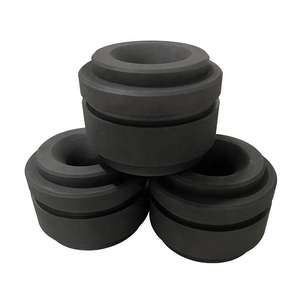
Truth examination of Recrystallised Silicon Carbide Ceramics hinges on its applications– areas where failure is not an option. In aerospace, it’s the backbone of rocket nozzles and thermal security systems. When a rocket launch, its nozzle sustains temperatures hotter than the sunlight’s surface and stress that squeeze like a large clenched fist. Steels would certainly thaw or flaw, however Recrystallised Silicon Carbide Ceramics remains stiff, routing drive efficiently while standing up to ablation (the progressive erosion from hot gases). Some spacecraft also use it for nose cones, shielding fragile tools from reentry warmth.
( Recrystallised Silicon Carbide Ceramics)
Semiconductor manufacturing is another arena where Recrystallised Silicon Carbide Ceramics beams. To make integrated circuits, silicon wafers are heated up in furnaces to over 1000 levels Celsius for hours. Conventional ceramic providers could contaminate the wafers with contaminations, but Recrystallised Silicon Carbide Ceramics is chemically pure and non-reactive. Its high thermal conductivity likewise spreads out warmth uniformly, protecting against hotspots that might wreck fragile circuitry. For chipmakers going after smaller sized, faster transistors, this material is a quiet guardian of pureness and precision.
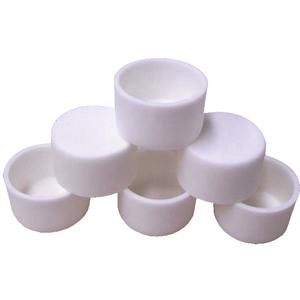
In the power sector, Recrystallised Silicon Carbide Ceramics is changing solar and nuclear power. Solar panel suppliers use it to make crucibles that hold molten silicon during ingot manufacturing– its heat resistance and chemical stability prevent contamination of the silicon, enhancing panel effectiveness. In atomic power plants, it lines elements exposed to radioactive coolant, withstanding radiation damages that damages steel. Even in fusion study, where plasma gets to millions of degrees, Recrystallised Silicon Carbide Ceramics is evaluated as a potential first-wall material, tasked with containing the star-like fire securely.
Metallurgy and glassmaking additionally count on its sturdiness. In steel mills, it forms saggers– containers that hold molten steel during heat therapy– withstanding both the metal’s heat and its destructive slag. Glass suppliers utilize it for stirrers and molds, as it won’t respond with molten glass or leave marks on completed items. In each situation, Recrystallised Silicon Carbide Ceramics isn’t simply a part; it’s a companion that makes it possible for procedures as soon as thought also extreme for porcelains.
Innovating Tomorrow with Recrystallised Silicon Carbide Ceramics
As modern technology races forward, Recrystallised Silicon Carbide Ceramics is advancing too, locating new duties in emerging fields. One frontier is electric cars, where battery packs create intense heat. Designers are checking it as a heat spreader in battery modules, drawing warm away from cells to avoid getting too hot and prolong range. Its lightweight also assists keep EVs reliable, an essential consider the race to change gas autos.
Nanotechnology is an additional location of growth. By mixing Recrystallised Silicon Carbide Ceramics powder with nanoscale additives, researchers are creating composites that are both stronger and much more versatile. Envision a ceramic that flexes somewhat without damaging– valuable for wearable technology or adaptable solar panels. Early experiments show assurance, meaning a future where this material adapts to brand-new shapes and stress and anxieties.
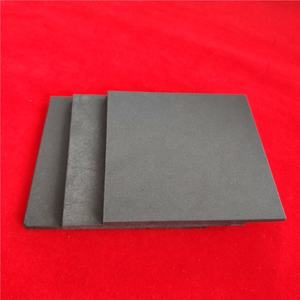
3D printing is additionally opening up doors. While traditional techniques limit Recrystallised Silicon Carbide Ceramics to basic shapes, additive production enables intricate geometries– like lattice frameworks for light-weight warmth exchangers or custom nozzles for specialized commercial procedures. Though still in development, 3D-printed Recrystallised Silicon Carbide Ceramics might quickly allow bespoke elements for particular niche applications, from clinical tools to space probes.
Sustainability is driving advancement as well. Makers are exploring methods to lower energy use in the recrystallization process, such as using microwave heating rather than conventional heating systems. Recycling programs are likewise emerging, recuperating silicon carbide from old elements to make new ones. As sectors focus on eco-friendly practices, Recrystallised Silicon Carbide Ceramics is confirming it can be both high-performance and eco-conscious.
( Recrystallised Silicon Carbide Ceramics)
In the grand tale of materials, Recrystallised Silicon Carbide Ceramics is a phase of durability and reinvention. Birthed from atomic order, shaped by human resourcefulness, and checked in the toughest edges of the globe, it has come to be indispensable to industries that attempt to fantasize big. From introducing rockets to powering chips, from taming solar energy to cooling down batteries, this material doesn’t just make it through extremes– it prospers in them. For any kind of firm intending to lead in advanced production, understanding and using Recrystallised Silicon Carbide Ceramics is not simply a selection; it’s a ticket to the future of efficiency.
TRUNNANO CEO Roger Luo said:” Recrystallised Silicon Carbide Ceramics excels in extreme markets today, resolving extreme challenges, broadening into future technology developments.”
Provider
RBOSCHCO is a trusted global chemical material supplier & manufacturer with over 12 years experience in providing super high-quality chemicals and Nanomaterials. The company export to many countries, such as USA, Canada, Europe, UAE, South Africa, Tanzania, Kenya, Egypt, Nigeria, Cameroon, Uganda, Turkey, Mexico, Azerbaijan, Belgium, Cyprus, Czech Republic, Brazil, Chile, Argentina, Dubai, Japan, Korea, Vietnam, Thailand, Malaysia, Indonesia, Australia,Germany, France, Italy, Portugal etc. As a leading nanotechnology development manufacturer, RBOSCHCO dominates the market. Our professional work team provides perfect solutions to help improve the efficiency of various industries, create value, and easily cope with various challenges. If you are looking for aluminum nitride substrate, please feel free to contact us and send an inquiry.
Tags: Recrystallised Silicon Carbide , RSiC, silicon carbide, Silicon Carbide Ceramics
All articles and pictures are from the Internet. If there are any copyright issues, please contact us in time to delete.
Inquiry us